First Order? Save 20% With Code FT20
Free Shipping on Orders Over $50
Questions? Call (866) 667-2113

CBD Dosage Guide for Beginners
CBD offers proven benefits for wellness and pain relief, but finding the right dosage remains confusing for most users.
CBD dosing has no one-size-fits-all rule. What works for one person may not work for the another. However, the effects of CBD can be experienced by a wide range of individuals, including pets when appropriate products are used. It’s all about finding what works for you.
Whether you're taking CBD for the first time or you’re a longtime user whose dosage doesn’t align with your goals, several key factors determine the right amount for you.
How Much CBD Should a Beginner Start With?
Most beginners find success with a very small dose—about 1–6 mg of CBD for every 10 pounds of body weight, or roughly 5–10 mg for many adults. There’s no universal dosage standard, which is why many doctors are not allowed to prescribe cannabinoids. This, along with the fact that many doctors never officially studied CBD therapy in school, means there’s quite a lot of confusion surrounding dosages.
We find it important to note that only a government entity can legally call a recommendation a "recommended daily allowance". That’s why we can’t give a personal recommendation, but rather provide valuable information for the reader to consider on their journey.
With that said, the respected rule of thumb is to always start small and slowly increase if necessary. In general, a person should begin with the lowest dosage and increase by 5 milligrams if the effects are not sufficient.
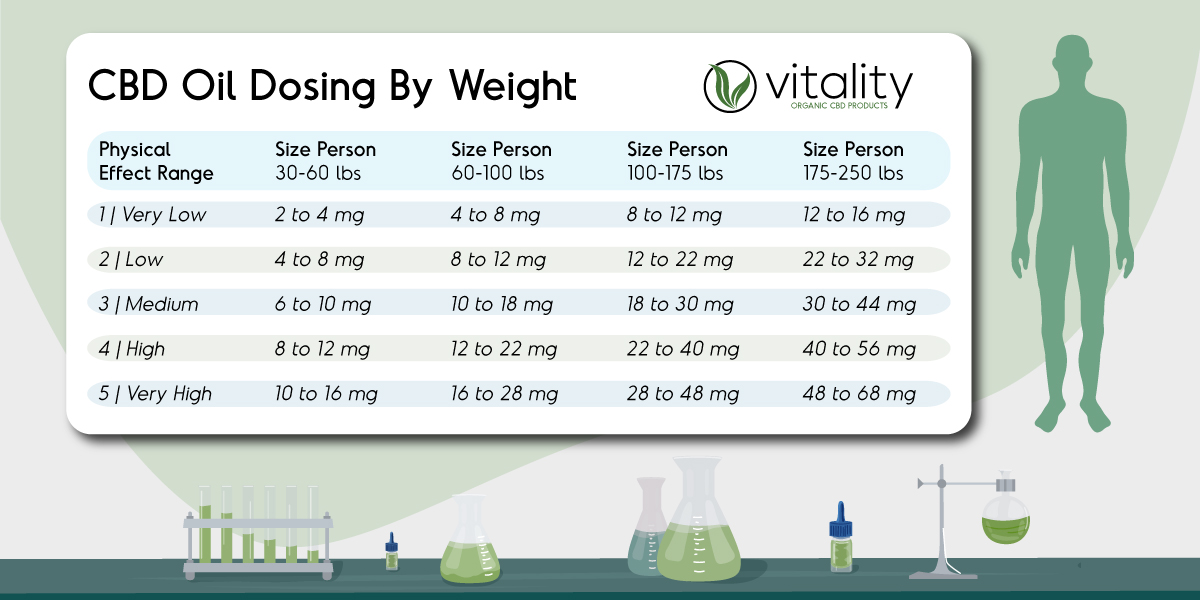
Below we’ll discuss what factors could affect your dosage, but to get an idea of the general CBD dosage guidelines that our experts recommend, check out the CBD dosage chart below.
CBD Oil Dosing By Weight
| Physical Effect Range | Person 30–60 lbs |
Person 60–100 lbs |
Person 100–175 lbs |
Person 175–250 lbs |
|---|---|---|---|---|
| 1 – Very Low | 2–4mg | 4–8mg | 8–12mg | 12–16mg |
| 2 – Low | 4–8mg | 8–12mg | 12–22mg | 22–32mg |
| 3 – Medium | 6–10mg | 10–18mg | 18–30mg | 30–44mg |
| 4 – High | 8–12mg | 12–22mg | 22–40mg | 40–56mg |
| 5 – Very High | 10–16mg | 16–28mg | 28–48mg | 48–68mg |
CBD Oil Bottle Calculator
Pick an amount to see how it works out with each bottle strength.
1. Measure by
2. Amount per serving
2. Amount per serving
3. Times per day
250mg bottle8.33 mg per full dropper18 drops≈ ½ dropper per serving
- Serving≈ 5 mg
- Per day≈ 5 mg
- Bottle lasts50 days
- Serving≈ 5 mg
- Per day≈ 5 mg
- Bottle lasts100 days
- Serving≈ 4.4 mg
- Per day≈ 4.4 mg
- Bottle lasts225 days
- Serving≈ 4.7 mg
- Per day≈ 4.7 mg
- Bottle lasts300 days
250mg bottle8.33 mg per full dropper36 drops≈ 1¼ droppers per serving
- Serving≈ 10 mg
- Per day≈ 10 mg
- Bottle lasts25 days
- Serving≈ 10 mg
- Per day≈ 10 mg
- Bottle lasts50 days
- Serving≈ 10 mg
- Per day≈ 10 mg
- Bottle lasts100 days
- Serving≈ 9.3 mg
- Per day≈ 9.3 mg
- Bottle lasts150 days
250mg bottle8.33 mg per full dropper54 drops≈ 1¾ droppers per serving
- Serving≈ 15 mg
- Per day≈ 15 mg
- Bottle lasts16 days
- Serving≈ 15 mg
- Per day≈ 15 mg
- Bottle lasts33 days
- Serving≈ 14.4 mg
- Per day≈ 14.4 mg
- Bottle lasts69 days
- Serving≈ 15.6 mg
- Per day≈ 15.6 mg
- Bottle lasts90 days
250mg bottle8.33 mg per full dropper72 drops≈ 2½ droppers per serving
- Serving≈ 20 mg
- Per day≈ 20 mg
- Bottle lasts12 days
- Serving≈ 20 mg
- Per day≈ 20 mg
- Bottle lasts25 days
- Serving≈ 20 mg
- Per day≈ 20 mg
- Bottle lasts50 days
- Serving≈ 20.2 mg
- Per day≈ 20.2 mg
- Bottle lasts69 days
250mg bottle8.33 mg per full dropper90 drops3 droppers per serving
- Serving≈ 25 mg
- Per day≈ 25 mg
- Bottle lasts10 days
- Serving≈ 25 mg
- Per day≈ 25 mg
- Bottle lasts20 days
- Serving≈ 24.4 mg
- Per day≈ 24.4 mg
- Bottle lasts40 days
- Serving≈ 24.9 mg
- Per day≈ 24.9 mg
- Bottle lasts56 days
250mg bottle8.33 mg per full dropper108 drops≈ 3½ droppers per serving
- Serving≈ 30 mg
- Per day≈ 30 mg
- Bottle lasts8 days
- Serving≈ 30 mg
- Per day≈ 30 mg
- Bottle lasts16 days
- Serving≈ 30 mg
- Per day≈ 30 mg
- Bottle lasts33 days
- Serving≈ 29.6 mg
- Per day≈ 29.6 mg
- Bottle lasts47 days
250mg bottle8.33 mg per full dropper144 drops≈ 4¾ droppers per serving
- Serving≈ 40 mg
- Per day≈ 40 mg
- Bottle lasts6 days
- Serving≈ 40 mg
- Per day≈ 40 mg
- Bottle lasts12 days
- Serving≈ 40 mg
- Per day≈ 40 mg
- Bottle lasts25 days
- Serving≈ 40.4 mg
- Per day≈ 40.4 mg
- Bottle lasts34 days
250mg bottle8.33 mg per full dropper180 drops6 droppers per serving
- Serving≈ 50 mg
- Per day≈ 50 mg
- Bottle lasts5 days
- Serving≈ 50 mg
- Per day≈ 50 mg
- Bottle lasts10 days
- Serving≈ 50 mg
- Per day≈ 50 mg
- Bottle lasts20 days
- Serving≈ 49.8 mg
- Per day≈ 49.8 mg
- Bottle lasts28 days
250mg bottle8.33 mg per full dropper2.1 mgper serving (≈ 8 drops)
- Per day2.1 mg
- Bottle lasts112 days
- Per day4.2 mg
- Bottle lasts112 days
- Per day8.3 mg
- Bottle lasts112 days
- Per day11.7 mg
- Bottle lasts112 days
250mg bottle8.33 mg per full dropper4.2 mgper serving (≈ 15 drops)
- Per day4.2 mg
- Bottle lasts60 days
- Per day8.3 mg
- Bottle lasts60 days
- Per day16.7 mg
- Bottle lasts60 days
- Per day23.3 mg
- Bottle lasts60 days
250mg bottle8.33 mg per full dropper6.2 mgper serving (≈ 22 drops)
- Per day6.2 mg
- Bottle lasts40 days
- Per day12.5 mg
- Bottle lasts40 days
- Per day25 mg
- Bottle lasts40 days
- Per day35 mg
- Bottle lasts40 days
250mg bottle8.33 mg per full dropper8.3 mgper serving (≈ 30 drops)
- Per day8.3 mg
- Bottle lasts30 days
- Per day16.7 mg
- Bottle lasts30 days
- Per day33.3 mg
- Bottle lasts30 days
- Per day46.7 mg
- Bottle lasts30 days
250mg bottle8.33 mg per full dropper12.5 mgper serving (≈ 45 drops)
- Per day12.5 mg
- Bottle lasts20 days
- Per day25 mg
- Bottle lasts20 days
- Per day50 mg
- Bottle lasts20 days
- Per day70 mg
- Bottle lasts20 days
250mg bottle8.33 mg per full dropper16.7 mgper serving (≈ 60 drops)
- Per day16.7 mg
- Bottle lasts15 days
- Per day33.3 mg
- Bottle lasts15 days
- Per day66.7 mg
- Bottle lasts15 days
- Per day93.3 mg
- Bottle lasts15 days
250mg bottle8.33 mg per full dropper18 drops≈ ½ dropper per serving
- Serving≈ 5 mg
- Per day≈ 10 mg
- Bottle lasts25 days
- Serving≈ 5 mg
- Per day≈ 10 mg
- Bottle lasts50 days
- Serving≈ 4.4 mg
- Per day≈ 8.9 mg
- Bottle lasts112 days
- Serving≈ 4.7 mg
- Per day≈ 9.3 mg
- Bottle lasts150 days
250mg bottle8.33 mg per full dropper36 drops≈ 1¼ droppers per serving
- Serving≈ 10 mg
- Per day≈ 20 mg
- Bottle lasts12 days
- Serving≈ 10 mg
- Per day≈ 20 mg
- Bottle lasts25 days
- Serving≈ 10 mg
- Per day≈ 20 mg
- Bottle lasts50 days
- Serving≈ 9.3 mg
- Per day≈ 18.7 mg
- Bottle lasts75 days
250mg bottle8.33 mg per full dropper54 drops≈ 1¾ droppers per serving
- Serving≈ 15 mg
- Per day≈ 30 mg
- Bottle lasts8 days
- Serving≈ 15 mg
- Per day≈ 30 mg
- Bottle lasts16 days
- Serving≈ 14.4 mg
- Per day≈ 28.9 mg
- Bottle lasts34 days
- Serving≈ 15.6 mg
- Per day≈ 31.1 mg
- Bottle lasts45 days
250mg bottle8.33 mg per full dropper72 drops≈ 2½ droppers per serving
- Serving≈ 20 mg
- Per day≈ 40 mg
- Bottle lasts6 days
- Serving≈ 20 mg
- Per day≈ 40 mg
- Bottle lasts12 days
- Serving≈ 20 mg
- Per day≈ 40 mg
- Bottle lasts25 days
- Serving≈ 20.2 mg
- Per day≈ 40.4 mg
- Bottle lasts34 days
250mg bottle8.33 mg per full dropper90 drops3 droppers per serving
- Serving≈ 25 mg
- Per day≈ 50 mg
- Bottle lasts5 days
- Serving≈ 25 mg
- Per day≈ 50 mg
- Bottle lasts10 days
- Serving≈ 24.4 mg
- Per day≈ 48.9 mg
- Bottle lasts20 days
- Serving≈ 24.9 mg
- Per day≈ 49.8 mg
- Bottle lasts28 days
250mg bottle8.33 mg per full dropper108 drops≈ 3½ droppers per serving
- Serving≈ 30 mg
- Per day≈ 60 mg
- Bottle lasts4 days
- Serving≈ 30 mg
- Per day≈ 60 mg
- Bottle lasts8 days
- Serving≈ 30 mg
- Per day≈ 60 mg
- Bottle lasts16 days
- Serving≈ 29.6 mg
- Per day≈ 59.1 mg
- Bottle lasts23 days
250mg bottle8.33 mg per full dropper144 drops≈ 4¾ droppers per serving
- Serving≈ 40 mg
- Per day≈ 80 mg
- Bottle lasts3 days
- Serving≈ 40 mg
- Per day≈ 80 mg
- Bottle lasts6 days
- Serving≈ 40 mg
- Per day≈ 80 mg
- Bottle lasts12 days
- Serving≈ 40.4 mg
- Per day≈ 80.9 mg
- Bottle lasts17 days
250mg bottle8.33 mg per full dropper180 drops6 droppers per serving
- Serving≈ 50 mg
- Per day≈ 100 mg
- Bottle lasts2 days
- Serving≈ 50 mg
- Per day≈ 100 mg
- Bottle lasts5 days
- Serving≈ 50 mg
- Per day≈ 100 mg
- Bottle lasts10 days
- Serving≈ 49.8 mg
- Per day≈ 99.6 mg
- Bottle lasts14 days
250mg bottle8.33 mg per full dropper2.1 mgper serving (≈ 8 drops)
- Per day4.2 mg
- Bottle lasts56 days
- Per day8.3 mg
- Bottle lasts56 days
- Per day16.7 mg
- Bottle lasts56 days
- Per day23.3 mg
- Bottle lasts56 days
250mg bottle8.33 mg per full dropper4.2 mgper serving (≈ 15 drops)
- Per day8.3 mg
- Bottle lasts30 days
- Per day16.7 mg
- Bottle lasts30 days
- Per day33.3 mg
- Bottle lasts30 days
- Per day46.7 mg
- Bottle lasts30 days
250mg bottle8.33 mg per full dropper6.2 mgper serving (≈ 22 drops)
- Per day12.5 mg
- Bottle lasts20 days
- Per day25 mg
- Bottle lasts20 days
- Per day50 mg
- Bottle lasts20 days
- Per day70 mg
- Bottle lasts20 days
250mg bottle8.33 mg per full dropper8.3 mgper serving (≈ 30 drops)
- Per day16.7 mg
- Bottle lasts15 days
- Per day33.3 mg
- Bottle lasts15 days
- Per day66.7 mg
- Bottle lasts15 days
- Per day93.3 mg
- Bottle lasts15 days
250mg bottle8.33 mg per full dropper12.5 mgper serving (≈ 45 drops)
- Per day25 mg
- Bottle lasts10 days
- Per day50 mg
- Bottle lasts10 days
- Per day100 mg
- Bottle lasts10 days
- Per day140 mg
- Bottle lasts10 days
250mg bottle8.33 mg per full dropper16.7 mgper serving (≈ 60 drops)
- Per day33.3 mg
- Bottle lasts7 days
- Per day66.6 mg
- Bottle lasts7 days
- Per day133.4 mg
- Bottle lasts7 days
- Per day186.7 mg
- Bottle lasts7 days
Based on the per-dropper amounts printed on our labels (1 dropper ≈ 1 ml ≈ 30 drops; 30 droppers per bottle). Drop size varies slightly; figures are approximate.
Factors That Could Affect Your CBD Oil Dosage
Your body weight plays a big role in your dosage, which is why the chart above is a great starting point. Other factors matter just as much:
- your specific wellness goal (sleep, discomfort, focus)
- how concentrated the product is
- prescription or OTC medications you already take
- personal sensitivity or prior cannabinoid use
What You’re Using It For
CBD is used for a variety of reasons and conditions, meaning that many users around the world have different goals. For instance, if a person has perfect health but wants to include CBD into their wellness routine, they may not need as high of a dosage as someone who is using it for pain relief after a surgery.
Certain conditions may also have specific recommendations. Let’s use arthritis patients as an example. The Arthritis Foundation recommends starting with just a few milligrams of CBD in sublingual form twice a day and increasing the dose by the same amount after a week if there’s not sufficient pain relief. However, this recommendation is specific to arthritis patients and could vary depending on how severe the condition is.
As you’re considering your dosage, ask yourself why you’re taking CBD and what your goals are. In general, if your answer involves painful or uncomfortable symptoms, then you may need a higher dosage to find relief.
What Other Medications You’re Using
CBD is typically well tolerated, but it is possible that CBD could affect the medications you’re taking. Harvard reports that some of the medications that could cause possible unintended effects are:
- A common blood thinner, warfarin
- A heart rhythm medication, amiodarone
- A thyroid medication, levothyroxine
- Several medications for seizures, including clobazam, lamotrigine, and valproate
Research on CBD interactions is still limited. Speak with your doctor about your exact situation. They may be able to recommend a dosage depending on the medication you’re taking.
The Strength of Your CBD Product
The concentration of your product will make a big difference in how much you need to take. It's important to understand that product quality and potency can vary significantly between brands. Your dosage should be calculated based on the specific product you purchase.
For instance, all of our organic CBD oils at Vitality are 30 ML, but what makes them different is the amount of CBD that the product contains. Our low-strength oil has 250 mg of CBD oil in the entire product, while our highest-strength has 1,400 mg.
Take a look at how our various CBD oils compare in regard to potency.
| Oil Strength | Serving Size | Amount of CBD oil per serving |
|---|---|---|
| 250 MG | 30 drops | 8.34 mg |
| 500 MG | 30 drops | 16.67 mg |
| 1000 MG | 30 drops | 33.34 mg |
| 1400 MG | 30 drops | 46.67 mg |
As you can see, the amount of CBD oil per serving depends on the strength of each product. Taking 30 drops of our 250 mg product is quite different from consuming 30 drops of our 1,4000 mg oil.
Calculate Your Dosage Based on Your Product
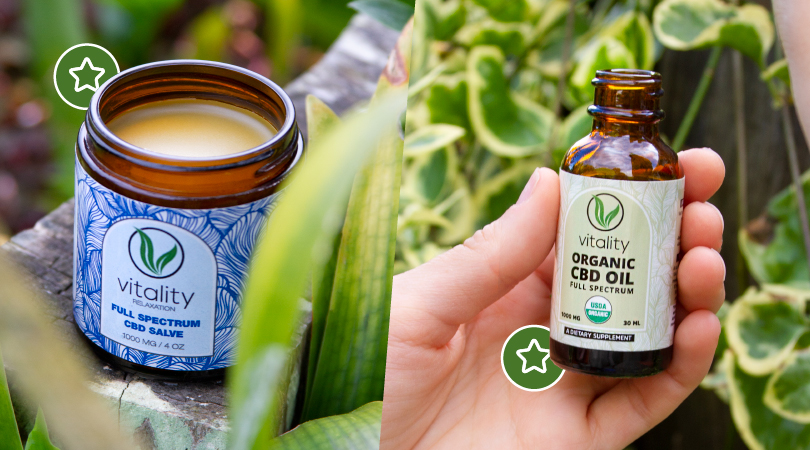
CBD comes in many forms, including:
- CBD oil
- CBD gummies
- CBD salves
The availability of CBD in different presentations often contributes to the confusion regarding CBD dosage. Consumers must pay special attention to how much is in their specific product, which will vary depending on the brand.
CBD Gummies
CBD gummies state how much is in a single serving. Let’s say your CBD gummies each have 5 mg of CBD, and you want to take 10 mg. This means that you should take 2 gummies. This calculation becomes more complex if you need to take 8 mg, for example, as you’ll need to estimate how much of the second gummy you should consume.
CBD Oil
When it comes to CBD oil, you may have to do a little math depending on what your product says on the package. Let’s take a look at an example.
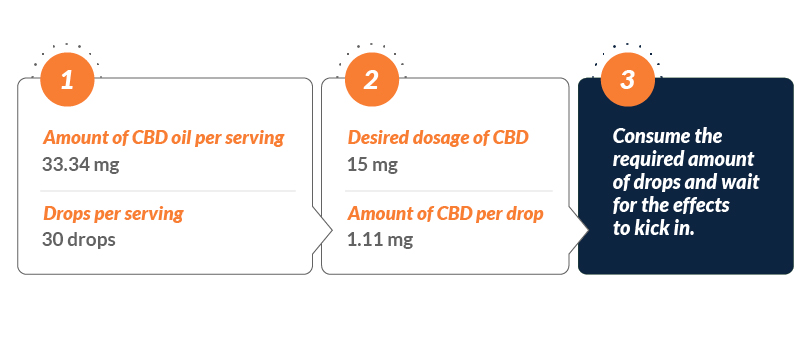
As shown on the package of Vitality’s organic CBD oil with 1,000 mg of CBD oil per container, 1 serving size is 1 dropper or 30 drops, which amounts to 33.34 mg of full-spectrum CBD oil per serving.
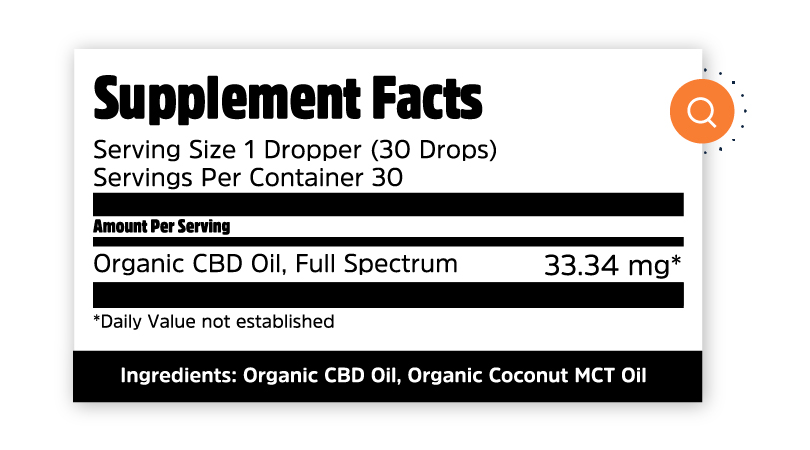
Now, if you only want to take 15 mg of CBD oil, then you need to figure out how many drops you should take. If each serving has 33.34 mg of CBD oil that is distributed in 30 drops, you have to divide the mg by the number of drops (33.34 mg divided by 30 drops per serving).
This means that every drop has around 1.11 mg of CBD. Now just divide your desired amount by the amount per serving.
Fifteen milligrams of CBD divided by 1.11 mg equals 13.51 drops. Round to about 14 drops to reach a 15 mg serving of Vitality’s CBD oil.
CBD Salve
Since CBD salves are absorbed through the skin, the dosage is not as delicate as oral consumption. CBD salves are also available in various strengths, so you can purchase one with a higher concentration of CBD if your pain or condition is severe, such as our CBD salve for chronic pain.
Many CBD salves do not tell you a specific serving size, as it depends on the size of the area that needs attention. For instance, you would use less product on just your knee than you would if you were applying it to your whole leg.
Apply enough to cover the area, just as if you were applying regular lotion. You can also use massage techniques to improve its effectiveness.
The Do’s & Don’ts of CBD Dosage
Do: Have Patience
It might take you a couple of tries to find the right dosage. You should be gradually increasing your dosage rather than doing it all at once. The general recommendation is to increase the dosage by 5 mg at a time.
Do: Keep a CBD Journal
Write down how many milligrams you take, when you take them, and how you feel an hour later. Tracking small changes helps you spot your personal ‘sweet spot’ and often reveals that very low doses can be effective.
Do: Purchase Quality CBD Products
Purchasing a product that only uses high-quality ingredients will guarantee the best experience. At Vitality, all of our products have been tested by a third party and have been carefully crafted to be a safe and natural daily supplement.
Don’t: Use Products that Haven’t Been Tested by a Third-Party
There is no better way to ensure the quality of a product than an objective and thorough analysis by a third-party lab, that is, a lab that works independently and does not have any association with the brand that manufactures the product it is testing.
Unfortunately, there have been some reported cases of CBD products that exceed the THC limit (the legal limit is 0.3%), have lower amounts of CBD than advertised, contain potentially harmful ingredients, and the list goes on. For this reason, it is paramount that you only purchase CBD products that have been tested by independent or third-party labs.
Don’t: Use It at Random Times
CBD can be used at any time of the day, which offers flexibility in incorporating CBD into your routine. The point is that you should make a routine that works with your schedule and goals. If your goal is to reduce chronic pain to help you get a better night’s sleep, then you should take it during your nighttime routine.
If you’re using it to help reduce work-provoked anxiety, you may want to take it before heading to work and after work when you’re winding down.
Finding the right routine based on your goals will help you achieve the desired effect. And with a little practice and adjustments at the beginning of your journey, you can find the perfect CBD oil dosage for your goals and lifestyle.
It’s important to note that while we have performed a tremendous amount of research to assemble these CBD dosing suggestions, we're not medical professionals. To make sure you’re using the right CBD dosage, please consult a medical professional. You should also consult your doctor if you are already taking medications or are prone to allergic reactions.
Related Articles
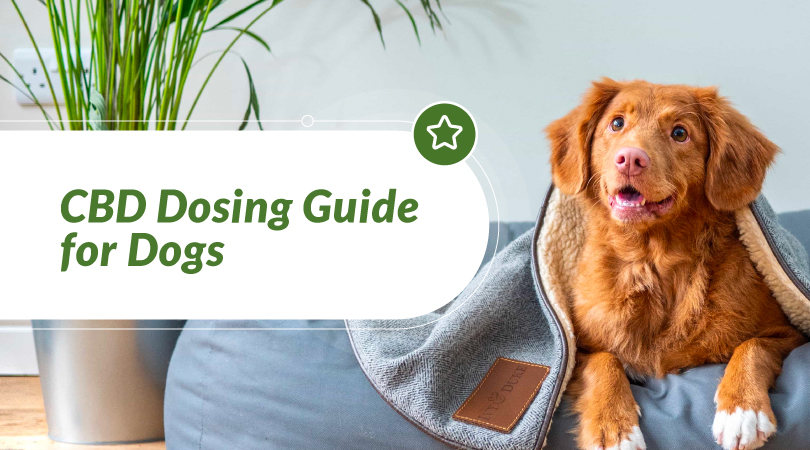
If you’re looking for a CBD dosing guide for pets, then we recommend reading our previous article. Our comprehensive guide tells you everything you need to know about finding the right dosage for your pet. Pet owners play a crucial role in determining the appropriate CBD regimen for their animals’ wellness needs.
Frequently Asked Questions About CBD Dosage
Can you take too much CBD?
CBD is generally well tolerated, even at higher doses. Research suggests that most people can safely consume up to 1,500 mg per day without serious side effects. However, taking more than your body needs may cause mild symptoms like drowsiness, dry mouth, or digestive discomfort. The key is to start low and increase gradually until you find your optimal dose. If you experience any unwanted effects, simply reduce your dosage.
How long does CBD take to work?
The time it takes for CBD to work depends on how you consume it. Sublingual CBD oil typically takes effect within 15 to 45 minutes because it absorbs directly into your bloodstream. CBD gummies and capsules take longer—usually one to two hours—since they must pass through your digestive system first. CBD salves applied to the skin may provide localized relief within 20 to 30 minutes. For best results, use CBD consistently at the same time each day.
How often should I take CBD each day?
Most people find success taking CBD once or twice daily, depending on their wellness goals. If you're using CBD for general wellness or mild discomfort, a single daily dose may be sufficient. For more persistent concerns like chronic pain or anxiety, splitting your total dosage into two servings—morning and evening—often provides more consistent relief throughout the day. Listen to your body and adjust your routine as needed.
What counts as a low, moderate, or high CBD dose?
Dosage ranges vary based on body weight and individual needs, but general guidelines include:
- Low dose: 5 to 15 mg per day, ideal for beginners or those seeking mild wellness support
- Moderate dose: 15 to 30 mg per day, suitable for managing everyday stress or discomfort
- High dose: 30 to 60 mg or more per day, often used for significant pain relief or severe symptoms
Remember that these are general ranges. Your ideal dose depends on factors like body weight, product strength, and your specific wellness goals. Always start at the lower end and increase slowly until you achieve the desired effect.
References
- CBD for arthritis pain: Arthritis foundation. CBD for Arthritis Pain | Arthritis Foundation. (n.d.).
- CR;, B. E. M. J. (n.d.). Cannabidiol as a potential treatment for anxiety disorders. Neurotherapeutics : the journal of the American Society for Experimental NeuroTherapeutics.
- E;, C. A. R. (n.d.). Evaluation of the effects of CBD hemp extract on opioid use and quality of life indicators in chronic pain patients: A prospective cohort study. Postgraduate medicine.
- Katsiaryna Bykov, P. (2021, January 11). CBD and other medications: Proceed with caution. Harvard Health.